

The Intention Behind Effortless
Your brand experience hinges on the moments most overlook. Emily Lyddon-Towl, one of our Associate Creative Directors, explores just how fragile a guest journey can become when small elements are ignored or taken for granted – showing why it all starts with the audience.
What’s Breaking Your Guest Journey Experience Without You Realising It?
It’s not the headline moments that define guest experience, but the subtle signals. You arrive at an event. Something is amiss. The path forward isn’t clear. The environment overwhelms. You pause, caught in a decision gap.
So what do you do?
You check your phone.
You hover near the entrance.
You follow someone who looks like they know where they’re going.
You ask the staff.
Or you leave.
Seemingly minor moments have an outsized impact – the difference between belonging and alienation. Once friction occurs, regaining trust is exponentially more difficult.
The root cause? Rarely a lack of creativity. More often, it’s a breakdown in the guest journey, a misalignment between intention and perception that causes even the boldest ideas to fall flat.
Start with the Guest, Not the Idea
Effortless experiences are engineered, not accidental. The best environments feel intuitive because they’re built with precision and empathy.
When a brief lands, it’s tempting to jump straight into ideas and deep-dive into the field. True discipline starts with the audience.
Who are they? What do they care about? How do they move through spaces like this?
A strong idea only works if people instinctively know how to engage with it.
That understanding doesn’t come from guesswork. It’s built on instinct and insight – working with the strategy and marketing team, leveraging interagency expertise, tracking cultural shifts, and analysing how people actually behave at live experiences.
We build feedback loops into everything. Post-event data, surveys, and attendee behaviours feed into the next experience – a constant process of learning, refining, and improving.
To make that understanding actionable, we segment audiences into three types:
The Diver - fully immersed, wants to experience everything.
The Swimmer – selective, engages with what interests them immediately.
The Paddler – more cautious, needs low-commitment entry points to engage.
Lead with your boldest, most immersive ideas – design first for the Diver. Once you know what truly works at this level, thoughtfully adapt and layer your approach so Swimmers and Paddlers can also engage, ensuring the energy and impact of your big ideas are accessible to all.
Design only for the Diver, and you risk overwhelming everyone else. If you only focus on the Paddler, the experience lacks depth. Balance creates flow and that is true across both B2B and B2C. Often marketers try to create distinctions between B2B and B2C experiences, but ultimately, every attendee wants to feel valued and engaged, regardless of the purpose behind the event. B2B guests may not need all the playful, interactive elements of B2C events, but they are just as sensitive to flow, clarity, and how considered the experience feels.
This also extends to how people experience space. At an awards show, we integrated ASMR lounges and quiet booths that offered a relaxed setting for those seeking a more intimate streaming space. These spaces were ideal for neurodivergent guests and anyone who may not want high energy at all times. Thoughtful breakout areas, pacing, and sensory considerations can completely change how accessible and enjoyable an experience feels.
Even with this understanding, friction still creeps in.
Small Barriers, Big Consequences
Guest journeys rarely collapse in dramatic ways. Instead, they erode through a series of micro-barriers, each seemingly insignificant, but collectively decisive.
Unclear entry points.
Too many competing focal features.
No clear sense of where to go next.
It’s easy to overlook these details while focusing on the bigger picture, but they’re often what guests remember most.
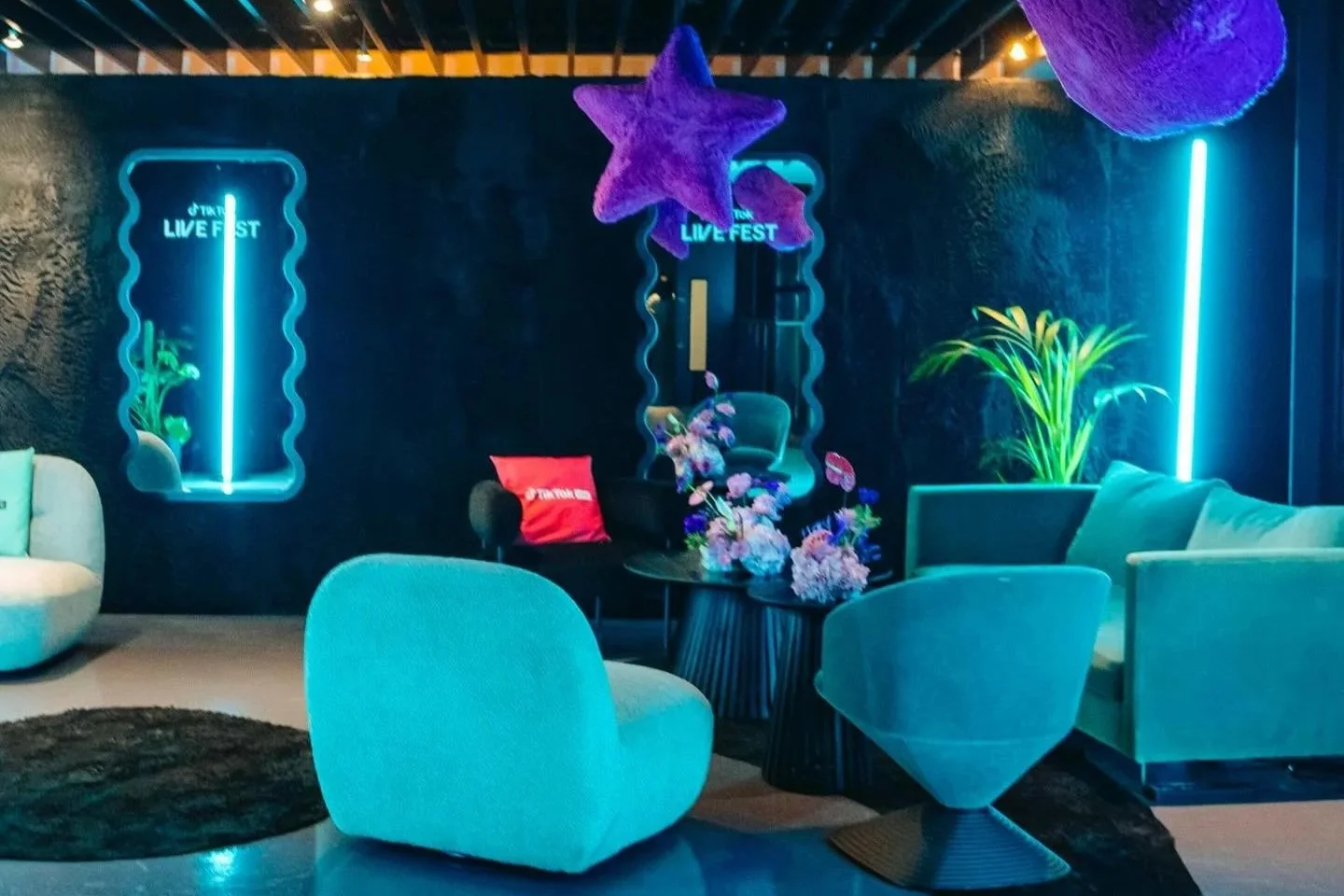
Technology can help remove friction, but only when it’s used intentionally. For TikTok LIVE Fest, we used RFID check-in to remove queues entirely. Guests entered seamlessly, moving straight into the experience without interruption. It’s a small shift, but a powerful one.
In contrast, something as simple as poor signage can undo everything. Suddenly, guests are no longer immersed; they’re problem-solving.
One of the biggest challenges in experiential design is knowing when to stop.
There’s always a temptation to add more. More moments, more content, more layers. But the more you add, the harder it becomes for people to understand what matters.
Every experience needs a clear thread running through it. When that thread is lost, the journey becomes fragmented, and people disengage.
The strongest experiences aren’t the busiest. They’re the ones where everything feels connected – where the space, content and flow all point in the same direction.
The Invisible Work Behind It
Most guests won’t see the months of planning, or the ideas quietly set aside to create clarity. But they will feel the difference when an experience just works, when every moment flows naturally, free of distraction.
What endures isn’t the long list of features or the effort behind the scenes. It’s the feeling guests carry with them. Design every moment with intention and clarity, because a seamless journey is what guests remember.
