

Why is designing experiences for feeling more important than ever in the age of fast attention?
Our 3D Designer Giorgia Golzio explores why designing for feeling is more important than ever in the age of fast attention. As audiences move rapidly through digital and physical environments, major brands such as TikTok and Netflix are moving beyond spectacle to create immersive experiences rooted in emotion, interaction and cultural relevance. In experiential marketing, feeling, not just visual impact, anchors memory, drives engagement, and turns attention into lasting connections.
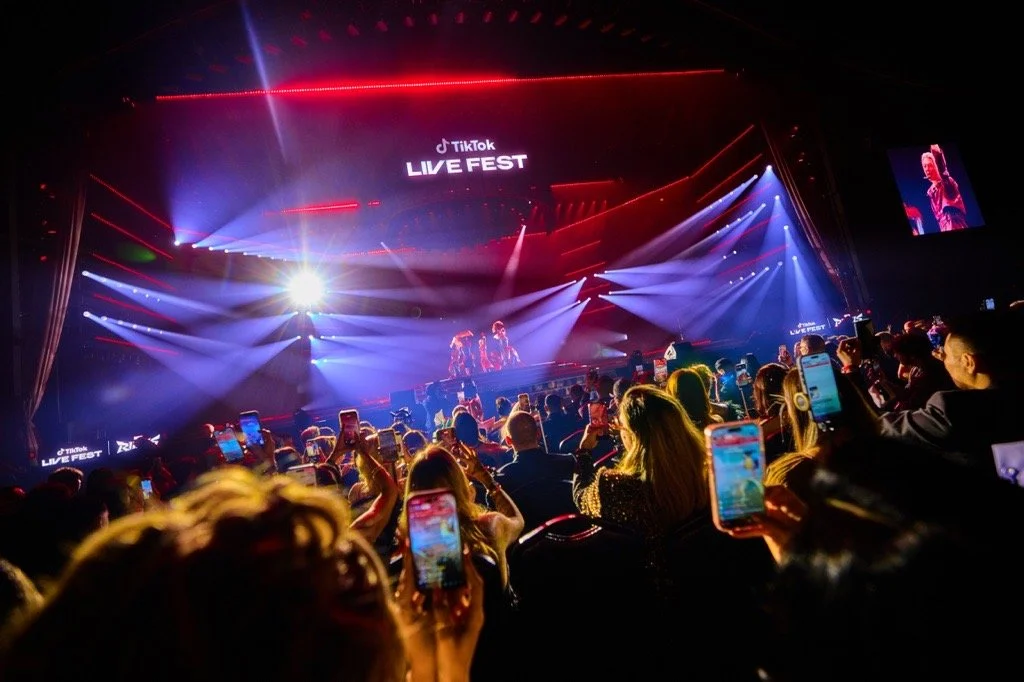
TikTok LIVE Fest
In an era of visual overload, we consume more but remember less. Attention moves faster today. Just as we flick through our phones at speed, our attention span now averages just 47 seconds, down from two and a half minutes in 2004, according to psychologist Dr. Gloria Mark of the University of California, Irvine.
We move through physical spaces the same way: quickly, selectively, always onto the next thing. People now absorb environments in fragments: a glance, a moment, a photo, and then they’re gone.
The result? Audiences are no longer impressed by spectacle alone. We have seen the big screens, the oversized props, the immersive visuals. Scale has become familiar. The question for experiential design is no longer how do we capture attention, but rather, how do we create something that stays?
In the age of fast attention, emotion is what anchors memory. Without emotional meaning, even the most impressive space becomes flashy and forgettable. When scale is tied to atmosphere, story, and emotion, it becomes memorable. This is where the shift is happening: from designing for impact to designing for feeling.
As a designer in the experiential industry, the first question I ask isn’t just what it will look like, but how I want people to feel when they experience it. Feeling isn’t created in one giant moment. It’s built through dozens of intentional design decisions:
Sensorial details
Designing for emotion means obsessing over the details that shape how a space is felt, not just how it looks — lighting that enhances rather than overwhelms, pacing that invites exploration, textures that feel tactile and human, soundscapes that draw you in before you even realise it. These choices may seem subtle, but they’re where connection lives. They build mood, and mood becomes memory.
Participation
Experiential design isn’t passive; audiences aren’t there to simply observe, they’re there to participate. Whether through moments of play, a reveal, a challenge or an environment that responds to them, interaction transforms a branded space from something seen into something lived — creating joy and connection in ways static visuals simply can’t.
Inclusion
Inclusion is an essential element of experiential design because spaces have the power to make people feel represented and recognised. When audiences see elements of themselves in an experience – emotionally, culturally or socially – it creates a sense of belonging, which, in turn, fosters connection.
Trends
Familiarity matters. When an experience taps into something audiences already recognise from culture or online spaces, it forms an immediate bridge. It feels relevant, personal, and shareable – not because it is loud, but because it resonates emotionally.
We recently delivered this year’s TikTok LIVE FEST in Las Vegas, designing both an awards show and immersive brand experiences that brought the platform into a physical space. The audience was made up of creators, a generation shaped by fast attention and constant scrolling, whose expectations for stimulation are incredibly high. Capturing their attention wasn’t about doing more or simply scaling up visuals. It was about translating a digital-first platform into something physical and emotionally tangible. We focused on designing an atmosphere that sparked celebration, community, and excitement, creating spaces where creators weren’t just spectators but part of the event's energy, surrounded by moments that felt interactive, personal, and shareable. In bringing an on-screen world into a real environment, the goal wasn’t to replicate the app, but to capture what TikTok LIVE represents: connection in real time, and the feeling of being seen.
As a trusted partner delivering B2B and B2E experiences for Netflix, we’ve seen their strategy reflect a similar shift. While attention has always been central to their events, there is now a deeper focus on emotional connection, bringing audiences closer to story, character, and atmosphere rather than spectacle alone.
Brands are no longer just competing for attention; they’re competing for emotional connection and experiential strategy is following suit. In many ways, less is more: when we are given less to look at, we are given more space to actually feel. In a world moving faster every day, the experiences that will last are the ones that slow people down, connect with them, and stay with them emotionally. In the age of fast attention, the most powerful thing experiential design can do is not just impress but connect.
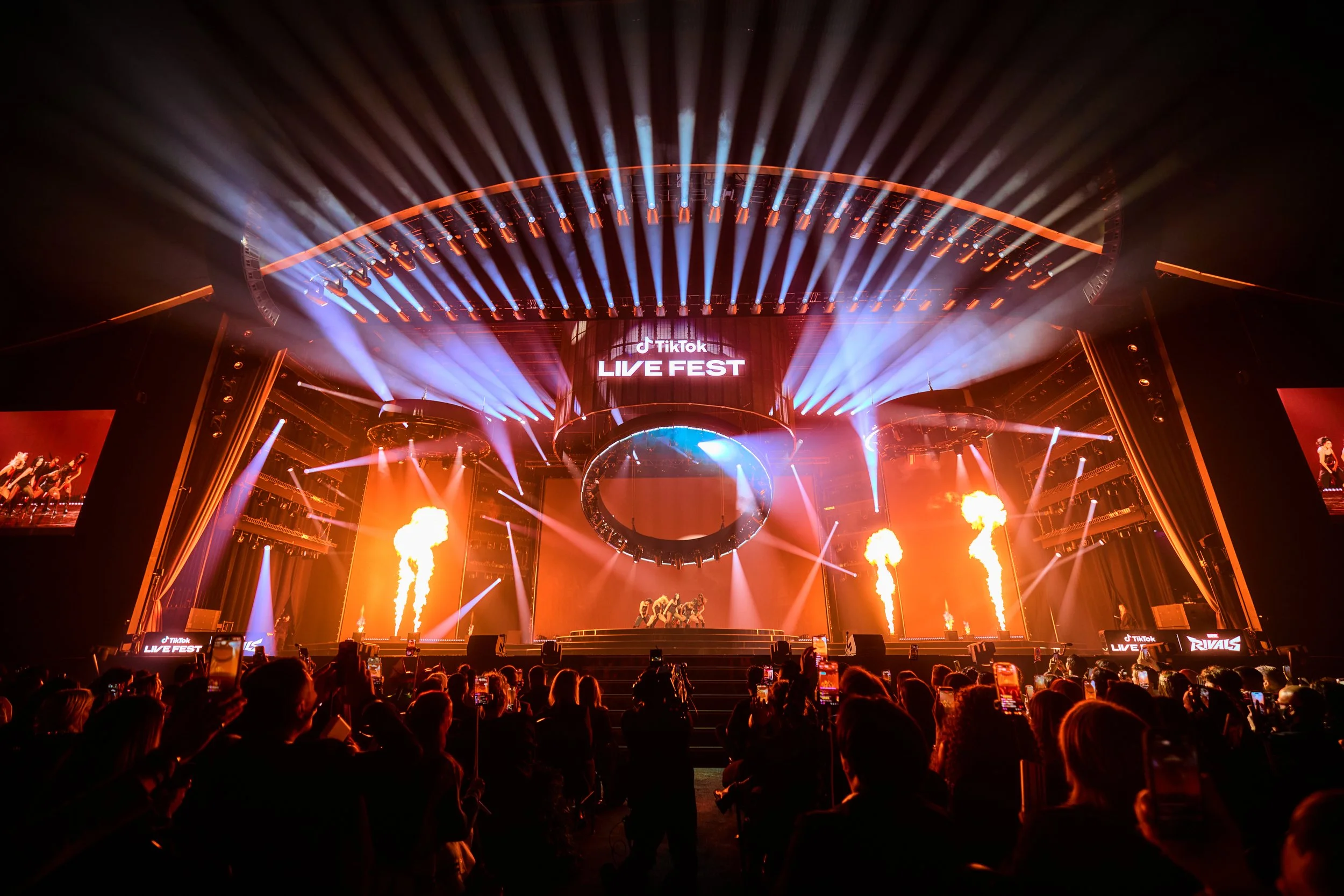
TikTok LIVE Fest